Align Practices and Projections with the Core Culture
Achieve organizational alignment using the Five Ps. The Five Ps of an organization are Purpose, Philosophy, Priorities, Practices, and Projections. To clarify, this structure of organizational attributes offers a unique way to understand an organization. But most importantly, it offers a way to manage organizational alignment.
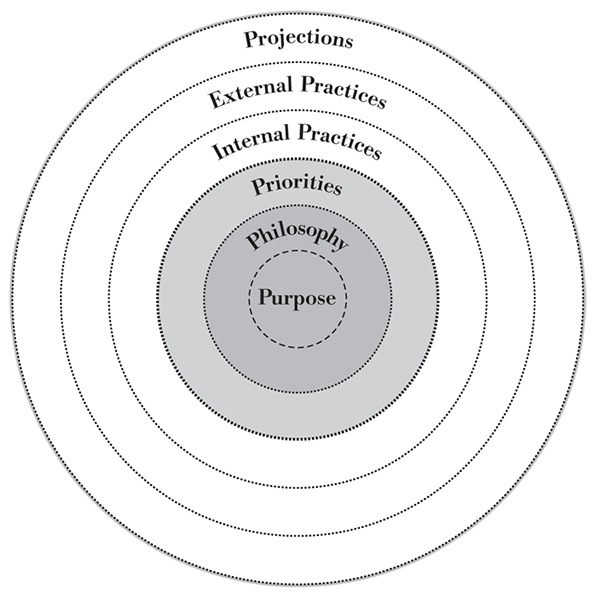
The Five Ps of an organization are Purpose, Philosophy, Priorities, Practices, and Projections
To orient you to the Five Ps, take a few moments to review these definitions and descriptions. Above all, building a shared culture begins with a common language. Firstly, explain and use the language of the Five Ps with employees. This will enable you to successfully discuss culture, alignment, and change. To sum up, a shared language promotes communication. And communication is an essential ingredient for a thriving culture and successful change.
Have a clearly-defined Core Culture
Purpose
The Purpose is the answer to the question “Why is the work you do important?” [More…]
Philosophy
The Philosophy is the prime, distinguishing principle or value or set of principles and values. To clarify, Philosophy is the enduring character of the organization. Above all, Philosophy directs how employees do their work. [More…]
Priorities
Priorities are the strategic and universal values. Therefore, Priorities enable the organization to achieve its goals and build an engaged workforce. [More…]
The greatest obstacle to organizational alignment is a lack of 1) clarity and 2) personal buy-in. This happens if employees either do not understand or do not value those prime principles. To clarify, if people do not believe and value the Core Culture, their actions will be incongruent with those principles and values.
Achieve organizational alignment of the Five Ps
With an understanding of and buy-in with your organization’s Core Culture, the path to success requires alignment. To sum up, all employees must align the remaining Ps – Practices and Projections – with the Core Culture.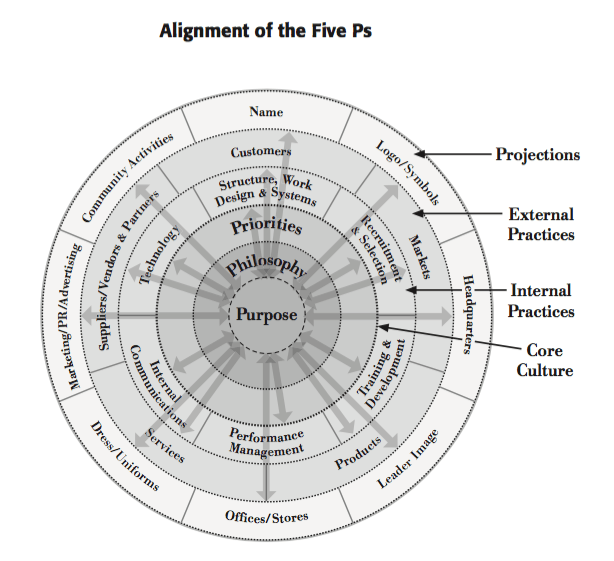
Achieve organizational alignment: Align Practices with the Core Culture
Practices are the behaviors and actions of employees of the organization. To clarify, they can be internal or external to the organization.
Internal Practices – These Practices include the inner workings of the organization. To explain, Internal Practices affect employee relationships, interactions and accomplishments. They include: your organizational structure, work design and systems for doing work. In addition, they include recruitment and selection; training and development; performance management; internal communications; and technology. To clarify, you must align all Internal Practices with the Core Culture. [More…]
External Practices – These Practices define how the organization interacts with others outside the organization. That is to say, they include: your customers and markets; the products or services you offer. External Practices also include your suppliers, vendors, and business partners. Similarly, you must align External Practices with the Core Culture. [More…]
Achieve organizational alignment: Align Projections with the Core Culture
These activities are the ways your organization paints an image of itself to the public. To clarify, Projections include your organization’s name and symbols; the image of your leader and your corporate headquarters. Similarly, Projections include your marketing, public relations, and advertising. In addition, they include community activities; the style of employee dress and uniforms; and the appearance of offices and stores. To sum up, your image should also align with your Core Culture and position your organization to achieve its goals. [More…]